
Ecotourism for Conservation: The Darkside for Indigenous Communities
31 October 2024 | Written by Grace Beach
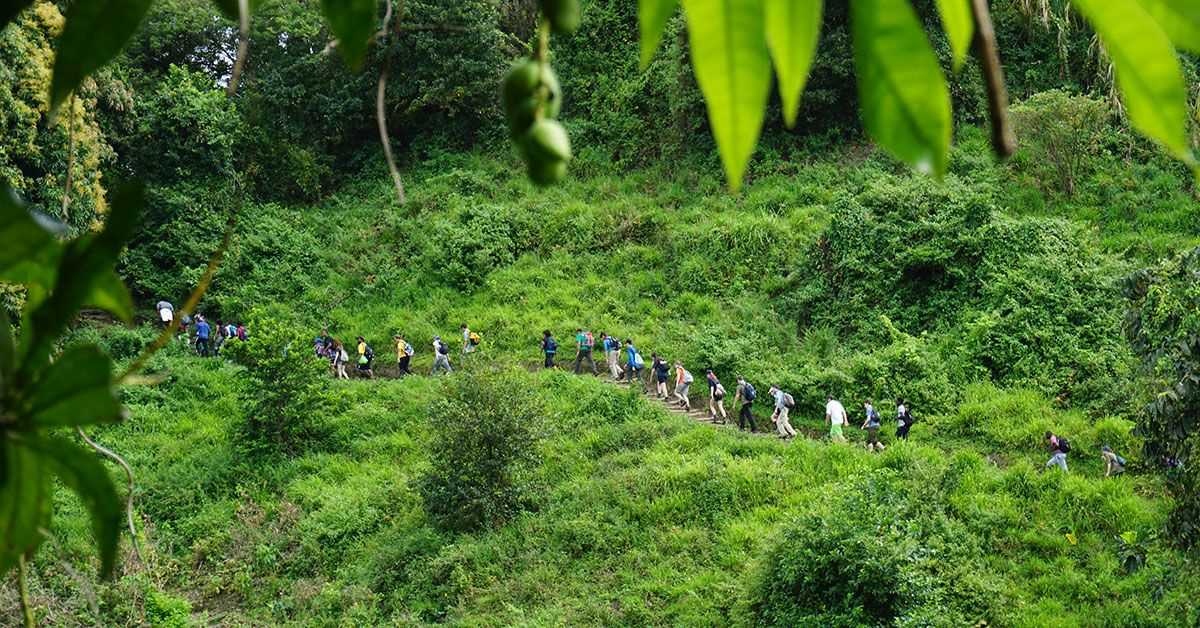
(Image 1 - Hiking activities as part of Ecotourism)
Imagine kayaking through crystal clear waters to a nearby waterfall or going on a Safari tour, ending the evening stargazing whilst indulging in local Indigenous music. Ecotourism invites many keen travellers to be at home with nature, combining adventure with conservation efforts, which could sustain the local indigenous communities. Before you pack your bags for your next trip, let's explore if ecotourism can actually help conserve the environment or if its' influence has repercussions for local Indigenous communities!
So, what is ecotourism?
The International Ecotourism Society outlines ecotourism as, "responsible travel to natural areas that conserves the environment, sustains the well-being of the local people, and involves interpretation and education". The concept of ecotourism became popular among keen travellers seeking to become more environmentally considerate. This occurred in the late 1980s, when the idea of sustainable development became the forefront of society's vision of growth. It focuses on preserving the natural environment, uplifting local Indigenous communities and promoting environmental awareness. However, if we take off our rose-tinted glasses, we wouldn't be so blind to the harsh reality of how ecotourism can destroy local Indigenous communities. Let's delve into this...
Whilst both ecotourism and Indigenous communities have a shared goal focused on the conservation and protection of the local habitats, the rise of ecotourism is fuelling the number of Indigenous people being displaced from their native land to create conservation reserves and tourist attractions. This displacement stems from what Western environmental NGOs and governments believe is "unused" land, valuable for development. This often ignores the connections that marginalised communities attach to their land, leading to the eviction of these native groups. For example, it was found that the traditional fishing communities on the coasts of Phuket in Thailand and Penang in Malaysia were uprooted to make room for the construction of luxury hotel resorts. It is also important to consider that from a Western perspective, local communities "criminally exploit" nature through hunting and shifting cultivation practices, and that land can only be protected if it is free of people, leading to the further displacement of indigenous people from their ancestral homelands. The most ironic aspect is that Western conservationists are encouraged to visit these areas to assess progress and assist in teaching locals about conservation, despite Indigenous communities successfully protecting and sustaining their local ecosystems for centuries. Therefore, there is an evident neo-colonial power of Western influence towards a modern conservation movement which is in turn displacing and destroying the survival of local Indigenous communities.
When travelling, many enjoy indulging in the local culture, and ecotourism can provide the opportunity to learn more about Indigenous history, however, this raises the important question; are Indigenous communities being 'consumed' rather than 'conserved'? Research by King and Stewart (1996) found that ecotourism encourages the commodification of indigenous culture and their habitats. This can lead to cultural dilution where traditional practices are performed purposely as a tourist attraction, and therefore authenticity can be lost. For example, take the Cham culture in Vietnam. Cham artists perform their Rija Nâgar ritual at Po Klaong Garai temple, transforming religious and worshipping practices into a tourist attraction. This can be argued as a form of cultural destruction and erosion of their sacred sites. They are also exposing local communities to typically "Western" tourists which can lead to issues of acculturation where their traditional customs and way of life may become Westernised.
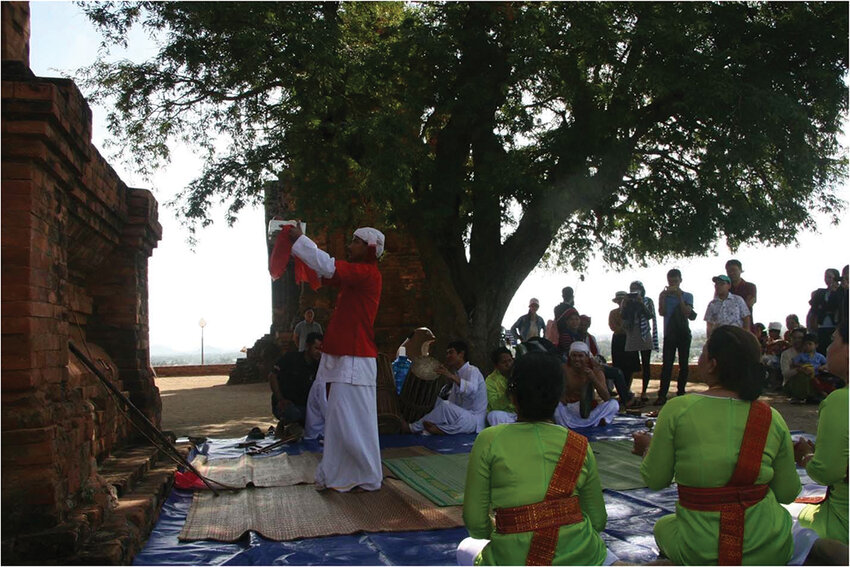
Image 2 - Photograph taken of Cham Indigenous artists performing the Rija Nâgar ritual for tourists
Participation in ecotourism can increase the incoming capital into Indigenous land and therefore improve the livelihood of many indigenous communities. For example, the Indigenous communities of Ghalegaun and Golaghat of Nepal have benefitted from the increase in employment opportunities, as well as, the sale of local crafts, religious memorabilia and locally-grown produce. The profit from ecotourism activities has funded education and healthcare facilities and encouraged community development. However, because of increased tourism, the price of basic goods has risen, and this has exacerbated poverty gaps, creating further disparities between tourists and locals. Additionally, questions remain about whether revenues are fairly distributed amongst ecotourism enterprises and indigenous populations, or whether they are being exploited for little financial benefit.
There are many aspects to consider when partaking in ecotourism activities, and now you know a little bit more about it, what can you do to help respect Indigenous communities?
- Be aware of who occupies the land you're on and seek out native history: educate yourself about the tribal communities within the local vicinity and how they live off the land. You can do this by listening to guided tours, visiting tribal museums or only travelling with organisations that prioritise the conservation of Indigenous tribes. This can not only deepen your cultural knowledge but can also enrich your travelling experience.
- Always ask for permission and follow appropriate rules of conduct: When visiting indigenous communities and sacred land, be respectful and follow guidance about behavioural guidance, photography and suggested noise levels. Please be aware Indigenous communities will have their own unique culture with different rules, so if you are unsure of what this includes, please ask a tour guide or research before the trip.
- Support fair practices: Choose ecotourism initiatives/charities that ensure fair compensation for local communities, and spread awareness of how ecotourism can negatively impact Indigenous communities.
- Donate to charities and organisations supporting Indigenous rights!
- Be grateful and show appreciation towards the beauty of Indigenous communities and their practices, and only advocate for attractions that respect and support indigenous lifestyles.

Image 3 - Protect Indigenous land protest sign
Whilst ecotourism can offer a promising solution towards travelling in a more sustainably, encouraging the conservation of the natural environment, it can pose significant challenges for the preservation of Indigenous communities. Through forced displacement, cultural dilution, and economic disparities, Indigenous communities can easily become victims within ecotourism. If we genuinely want to make a difference in conservation and contribute to the achievement of the sustainable development goals, we need to address the injustices and inequalities Indigenous communities face. So next time you are considering travelling, please do so with respect, not just for the conservation of the wildlife, but also for the local people!
References:
Carr, A., Ruhanen, L. and Whitford, M. 2016. Indigenous people and tourism: the challenges and opportunities for sustainable tourism. Journal of Sustainable Tourism. [Online]. 24(8-9), pp.1067-1079. [Accessed 24 October 2024]. Available from: https://doi.org/10.1080/09669582.2016.1206112
Coria, J. and Calfucura, E. 2012. Ecotourism and the development of indigenous communities: The good, the bad, and the ugly. Ecological Economics. [Online]. 73(n/a), pp.47-55. [Accessed 21 October 2024]. Available from: https://doi.org/10.1016/j.ecolecon.2011.10.024
Hill, A. 2010. Wildlife conservation projects do more harm than good, says expert. The Guardian. [Online]. 29 July. [Accessed 24 October 2024]. Available from: https://www.theguardian.com/environment/2010/jul/29/wildlife-conservation-projects-more-harm
Jennings, H. 2017. Research Briefing Indigenous Peoples & Tourism. [Online]. n/a: Tourism Concern. [Accessed 24 October 2024]. Available from: https://www.humanrights-in-tourism.net/sites/default/files/media/file/2020/rc025indigenous-peoples-tourism-1197.pdf
K, C. A., Gimire, S. and Dhakal, A. 2021. Ecotourism and its impact on indigenous people and their local environment: case of Ghalegaun and Golaghat of Nepal. GeoJournal. [Online]. 86(n/a), pp.2747-2765. [Accessed 21 October 2024]. Available from: https://doi.org/10.1007/s10708-020-10222-3
King, D.A. and Stewart, W.P. 1996. Ecotourism and commodification: protecting people and places. Biodiversity & Conservation. [Online]. 5(n/a), pp.293-305. [Accessed 23 October 2024]. Available from: https://link.springer.com/article/10.1007/bf00051775
Patel, D. 2019. Ecotourism and Neocolonialism: The human cost of wildlife conservation. 25 April. LSE Blogs. [Online]. [Accessed 24 October 2024]. Available from: https://blogs.lse.ac.uk/internationaldevelopment/2019/04/25/we-need-to-stop-turning-a-blind-eye-to-the-human-cost-of-wildlife-conservation/
Stronza, A., Hunt, C.A. and Fitzgerald, L.A. 2019. Ecotourism for Conservation? Annual Review of Environment and Resources. [Online]. 44(1), pp.229-253. [Accessed 21 October 2024]. Available from: http://dx.doi.org/10.1146/annurev-environ-101718-033046
The International Ecotourism Society. c2019. What Is Ecotourism? [Online]. [Accessed 21 October 2024). Available from: https://ecotourism.org/what-is-ecotourism/
Tuyen, Q.D. 2023. Chapter 8 Staging Culture, Selling Authenticity: The Commodification of the Cham Community's Traditions. In: Tuyen, Q.D. ed. Heritage Conservation and Tourism Development at Cham Sacred Sites in Vietnam. [Online]. Singapore: Springer, pp.173-194. [Accessed 23 October 2024]. Available from: https://doi.org/10.1007/978-981-99-3350-1_8
Zaitchik, A. 2018. How Conservation Became Colonialism. Foreign Policy. [Online]. 16 July. [Accessed 24 October 2024]. Available from: https://foreignpolicy.com/2018/07/16/how-conservation-became-colonialism-environment-indigenous-people-ecuador-mining/
Image References:
Image 1: The International Ecotourism Society. 2019. Ecotourism is The Solution To Overtourism. [Online]. [Accessed 30 October 2024]. Available from: https://ecotourism.org/news/ecotourism-is-the-solution-to-overtourism/
Image 2: Tuyen, Q.D. 2023. Cham artists perform the Rija Nâgar ritual for tourists at the temple. [Online]. [Accessed 23 October 2024]. Available from: https://doi.org/10.1007/978-981-99-3350-1_8
Image 3: Tenure Facility. [no date]. Indigenous Peoples and local communities Land Rights at COP26. [Online]. [Accessed 30 October 2024. Available from: https://thetenurefacility.org/indigenous-peoples-and-local-communities-land-rights-at-cop26/